 Epoxy Coating Services
Epoxy coatings are a type of thermosetting copolymer. Epoxy coatings are often used on concrete and steel because they provide a solvent-resistant finish. They have a number of other advantages and can be used in a wide range of applications because epoxy is chemical-resistant, abrasion-resistant and corrosion-resistant.
Epoxy coating is typically used in piping systems because of its excellent corrosion-resistance properties. It provides long-term performance in a variety of challenging environments and soil conditions.
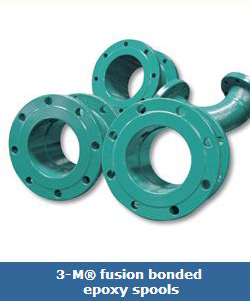
3-M® Fusion Bond Epoxy
Delta Coatings & Linings carries 3M™ Scotchkote™ Fusion-Bonded Epoxy Coating 6233 because it is a significantly advanced high-performance fusion-bonded epoxy coating that utilizes special adhesion promoting agents to enhance cathodic disbondment resistance.
Epoxy Coating Benefits
Delta Coatings and Linings carry 3M™ Scotchkote™ Fusion-Bonded Epoxy Coating 6233 because it is a significantly advanced high-performance fusion-bonded epoxy coating that utilizes special adhesion-promoting agents to enhance cathodic disbondment resistance.
It is a cost-effective, lightweight option that offers outstanding flexibility and protection. The benefits of choosing 3M™ Scotchkote™ Fusion-Bonded Epoxy Coating include:
- Strong chemical resistance
- Strong thermal properties
- Excellent corrosion resistance
- Excellent abrasion resistance
- Resistant to soil stress
- Mechanical damage-resistance properties
- Easy and quick application
Industries That Use Epoxy Coatings
3M™ Scotchkote™ Fusion-Bonded Epoxy Coating 6233 is the go-to coating in all industries looking for a high-performing coating for piping. It is an industry leader when used in corrosive soils, hydrocarbons, harsh chemicals and seawater.
Epoxy coatings are usually applied to internal or external surfaces of pipework, as well as on girth welds and other fittings. It is, therefore, suitable for the following industries:
- Pipeline transmission
- Crude oil
- Natural gas
- Petrol
The coatings can be applied to pipelines that run above ground, underground, and below water.
Delta Coatings and Linings has been applying coatings for more than 40 years. If you don’t know which type of coating is best for your unique application, Delta has a team of experts standing by to help you find the perfect type of coating. Fill out our contact form, and we will get back to you soon!
For All Your Industrial Coating Applications
Delta Coatings & Linings' line of protective industrial metal coatings can solve many different types of applications.
Abrasion Resistance
Abrasion Resistance
Often, the first hint that something’s wrong with a process or application is an unusual noise. It could sound like a squeal, chatter or grinding, among other things, but it indicates parts are rubbing against each other. Left unaddressed can lead to poor performance or failure.

Baked-On Linings
Baked-On Linings
Baked-on linings create a protective coating for tanks, ducts, piping, and other devices. This coating is applied to a prepped surface and heated with care to ensure even temperature from floor to ceiling, which maximizes adhesion.

Chemical Resistance
Chemical Resistance
Chemical resistant coatings provide benefits to a range of industries including medical, food, rubber manufacturing and more. Chemical resistant coatings are essential to equipment such as tanks, pumps, and valves exposed to chemicals.

Corrosion Resistance
Corrosion Resistance
Anti-corrosion coatings can help deter material degradation brought on by oxidation, moisture, and chemical exposure, among others. They function as a barrier preventing contact between corrosive materials and chemical compounds.

Dry/Solid Film Lubricants
Dry/Solid Film Lubricants
Dry film lubricants (solid film lubricants) are designed to reduce friction between surfaces moving against each other. These coatings prevent galling and seizing while protecting in hot and cold environments.
Non-Stick Coatings
Non-Stick Coatings
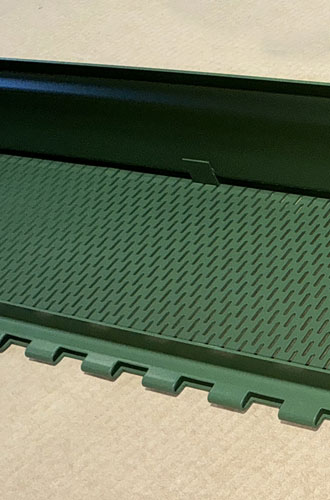
Non-Stick industrial coatings are used in a wide range of industries. Some benefits that non-stick coating applications are minimized machine downtime and maximizes production with reduced coefficient of friction.